⚡ Quick Answer
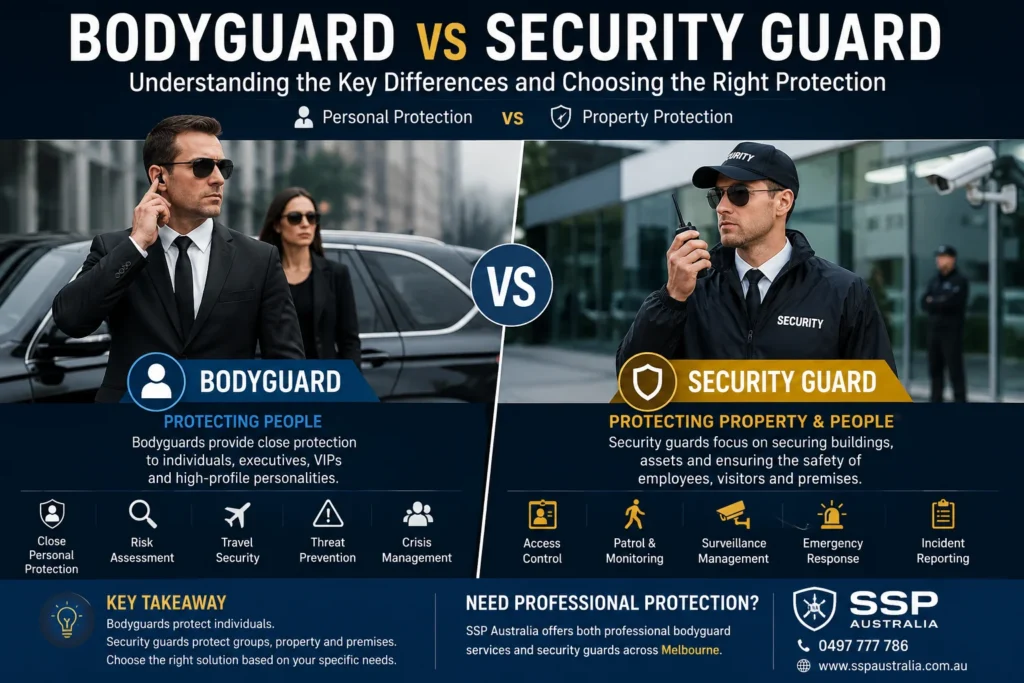
The main difference between a bodyguard and a security guard is their primary objective. A bodyguard provides close personal protection for individuals facing elevated security risks, while a security guard protects properties, businesses, assets, employees, and visitors. Bodyguards focus on the safety of a specific person, whereas security guards focus on maintaining safety and security at a designated location. Choosing the right protection depends on your risk level, environment, and security requirements.
📋 What This Guide Covers
- What a bodyguard does
- What a security guard does
- Major differences between both roles
- Training and qualifications comparison
- Risk levels each service addresses
- Industries that hire bodyguards
- Industries that rely on security guards
- Cost comparison
- When to hire a bodyguard
- When to hire a security guard
- How modern security companies combine both services
- Frequently asked question
Walk into any major corporate event, luxury hotel, government facility, or construction site in Melbourne and you will likely see security personnel on duty. However, not all security professionals perform the same role. Some are assigned to protect buildings and assets, while others are responsible for protecting high-profile individuals from potential threats.
As security risks continue to evolve in 2026, businesses and individuals are increasingly evaluating whether they need a bodyguard or a security guard. Although both professions fall under the broader security industry, their duties, responsibilities, training requirements, and operational approaches differ significantly.
This guide explains the differences between bodyguards and security guards, helping you determine which type of protection is most appropriate for your situation.
The Growing Demand for Professional Protection
Modern security challenges are more complex than ever before. Businesses face risks such as theft, vandalism, trespassing, and workplace incidents, while executives, celebrities, and high-net-worth individuals may face personal threats requiring dedicated protection.
Many organizations work with experienced corporate security specialists to assess risks and implement appropriate protection strategies. The right security solution not only reduces risk but also provides peace of mind for clients, employees, and stakeholders.
What Is a Bodyguard?
Personal Protection for High-Risk Individuals
A bodyguard is a highly trained security professional responsible for protecting a specific person rather than a location. Their role extends far beyond standing beside a client. They conduct threat assessments, plan secure routes, monitor surroundings, identify suspicious behavior, and respond immediately to potential dangers.
Bodyguards often accompany clients during:
- Business meetings
- Public appearances
- Conferences
- International travel
- VIP events
- Private functions
Their primary objective is to prevent threats before they become incidents.
Core Bodyguard Responsibilities
- Personal protection
- Threat assessment
- Route planning
- Crowd management
- Emergency response
- Secure transportation coordination
- Advance venue inspections
- Risk mitigation strategies
What Is a Security Guard?
Protecting Property, Assets, and People
A security guard focuses on securing a physical location rather than protecting a specific individual. Security guards are commonly deployed at commercial buildings, construction sites, warehouses, retail centres, healthcare facilities, and public events.
Their role is to deter criminal activity, enforce site policies, monitor access points, and respond to incidents.
Many businesses rely on Melbourne static security solutions to maintain a visible security presence and reduce security risks across their premises.
Core Security Guard Responsibilities
- Access control
- Site patrols
- CCTV monitoring
- Visitor management
- Incident reporting
- Alarm response
- Emergency assistance
- Security inspections
Key Difference: Focus of Protection
Bodyguards Protect Individuals
Bodyguards are dedicated to the safety of one client or a small group of individuals. Every decision they make revolves around protecting that person from harm.
Common bodyguard clients include:
- Executives
- Politicians
- Celebrities
- Professional athletes
- VIP guests
- High-net-worth individuals
Security Guards Protect Locations
Security guards protect physical sites and everyone within those locations. Their focus is broader and often involves maintaining security for hundreds or even thousands of people.
Examples include:
- Construction projects
- Corporate offices
- Warehouses
- Shopping centres
- Hotels
- Events
Key Difference: Level of Risk
Bodyguards Handle Elevated Threat Levels
Bodyguards are typically hired when there is a known or perceived threat to an individual’s safety.
Threats may include:
- Stalking
- Harassment
- Assault
- Kidnapping risks
- Public disturbances
- Targeted attacks
In some situations, clients may require professional armed protection services depending on threat assessments and local regulations.
Security Guards Manage General Security Risks
Security guards focus on preventing:
- Theft
- Vandalism
- Trespassing
- Unauthorized access
- Workplace violence
- Property damage
Their role is preventative and operational rather than personal.
Key Difference: Working Environment
Bodyguards Are Mobile
Bodyguards travel wherever their clients go.
Their work environments constantly change and may include:
- Airports
- Hotels
- Conferences
- Private residences
- Corporate meetings
- Public venues
Flexibility and situational awareness are essential.
Security Guards Are Site-Based
Security guards usually remain assigned to specific locations.
Businesses frequently deploy 24-hour static guard protection to secure sites around the clock and maintain consistent security coverage.
Key Difference: Visibility and Security Presence
Bodyguards May Operate Discreetly
Many executive protection professionals blend into their surroundings to avoid drawing attention.
Their goal is often to provide protection without disrupting the client’s activities.
Security Guards Provide Visible Deterrence
Security guards are intentionally visible.
A uniformed officer at an entrance, gate, or patrol route acts as a powerful deterrent against criminal activity.
This visible presence often prevents incidents before they occur.
Key Difference : Training and Skills
Bodyguard Training
Bodyguards often receive advanced instruction in:
- Executive protection
- Defensive tactics
- Surveillance detection
- Threat assessment
- Emergency evacuation
- Protective driving
- Crisis management
Their training prepares them to respond quickly in high-risk situations.
Security Guard Training
Security guards are trained in:
- Patrol procedures
- Access control
- Emergency response
- Customer service
- Incident documentation
- CCTV operations
- Workplace safety
The focus is on maintaining secure environments and responding effectively to incidents.
Industries That Hire Bodyguards
Bodyguards are commonly employed by:
- Corporate executives
- Entertainment professionals
- Government officials
- Diplomats
- VIP visitors
- Wealthy individuals
These clients often require protection beyond what traditional security services provide.
Industries That Hire Security Guards
Security guards are widely used across:
- Construction
- Retail
- Healthcare
- Logistics
- Education
- Manufacturing
- Hospitality
- Government facilities
Many organizations also use reliable security patrol services to monitor multiple sites efficiently and respond quickly to security concerns.
Bodyguard vs Security Guard Comparison Table
| Feature | Bodyguard | Security Guard |
| Primary Focus | Individual Protection | Property Protection |
| Work Environment | Mobile | Site-Based |
| Risk Level | High | Moderate |
| Client Type | VIPs & Executives | Businesses & Organizations |
| Visibility | Often Discreet | Highly Visible |
| Threat Management | Personal Threats | Site Security Risks |
| Travel Required | Frequent | Limited |
| Protection Scope | Individual | Location & Assets |
When Should You Hire a Bodyguard?
A bodyguard is the right choice when:
- You face personal security threats
- You attend high-profile events
- You require executive protection
- You travel frequently
- You are a public figure
- You need personal risk management
The service is designed around protecting people rather than places
When Should You Hire a Security Guard?
A security guard is ideal when you need to:
- Protect commercial property
- Monitor construction sites
- Secure warehouses
- Control access to facilities
- Prevent theft and vandalism
- Enhance workplace safety
For most businesses, security guards provide the most practical and cost-effective solution
The Future of Professional Security Services
The security industry is evolving rapidly. Modern security providers increasingly combine technology, real-time reporting, GPS monitoring, mobile patrols, and highly trained personnel to deliver comprehensive protection.
Organizations now expect accountability, transparency, and professional service delivery from their security providers. Whether protecting an executive or securing a commercial property, professional security solutions play a critical role in reducing risk and maintaining safety.
Final Verdict
Bodyguards and security guards serve different but equally important functions.
If your primary concern is personal safety and threat protection, a bodyguard provides dedicated close protection and risk management.
If your goal is protecting property, assets, employees, and visitors, a security guard offers effective site-based security and visible deterrence.
Understanding the differences helps ensure you invest in the right level of protection for your specific needs.
Frequently Asked Questions
Is a bodyguard better than a security guard?
Neither is better; they serve different purposes. Bodyguards protect individuals, while security guards protect locations and assets.
Do bodyguards carry weapons?
This depends on local laws, licensing requirements, and threat assessments. Some executive protection assignments may require armed protection where legally permitted.
Are security guards trained to protect people?
Yes. Security guards protect employees, visitors, and members of the public within the sites they secure, but their primary focus remains site security rather than individual protection.
Which service costs more?
Bodyguard services generally cost more because they involve specialized training, personalized protection, and higher-risk responsibilities.
Can businesses hire bodyguards?
Yes. Businesses often hire executive protection professionals for CEOs, executives, visiting dignitaries, and VIP guests.
Which service is best for a construction site?
Security guards are typically the best choice for construction sites because they provide access control, patrols, monitoring, and incident response throughout the project.